In Harry M. Benshoff’s article, “The Monster and the Homosexual”, he looks at how homosexuality is often considered to be a monstrous condition. He talks about real life horrors, like the AIDS crisis, which further reinforced people viewing gays as monsters spreading death.He explains that when depicted in film, homosexuals are often lurking in the shadows, like a monster, and when they come out, they spread panic and fear in the lives of “normal” people. In the article, he explains how in film, the conflicts generally arise from what is viewed as normal confronting “the other”. Queerness often takes the role of the other in these films, and it is set up as a disruptive force that attempts to question the status quo. What is queer is almost always set up to be the opposite of the masculine society it resides in. The homosexual is looked down upon because it displays feminine characteristics and crosses all boundaries set up by the status quo.
In the film A Nightmare on Elm Street II: Freddy’s Revenge, director Jack Sholder depicts a conflict between the normal status quo, and the force of homosexuality that disrupts it. The film’s focus is on Jesse, a teenage boy who has just moved into a new town, who gets possessed by the murderous spirit of Freddy Krueger. After Jesse is forced to do terrible things by Freddy, it is up to the girl that loves him to save him from this monster.
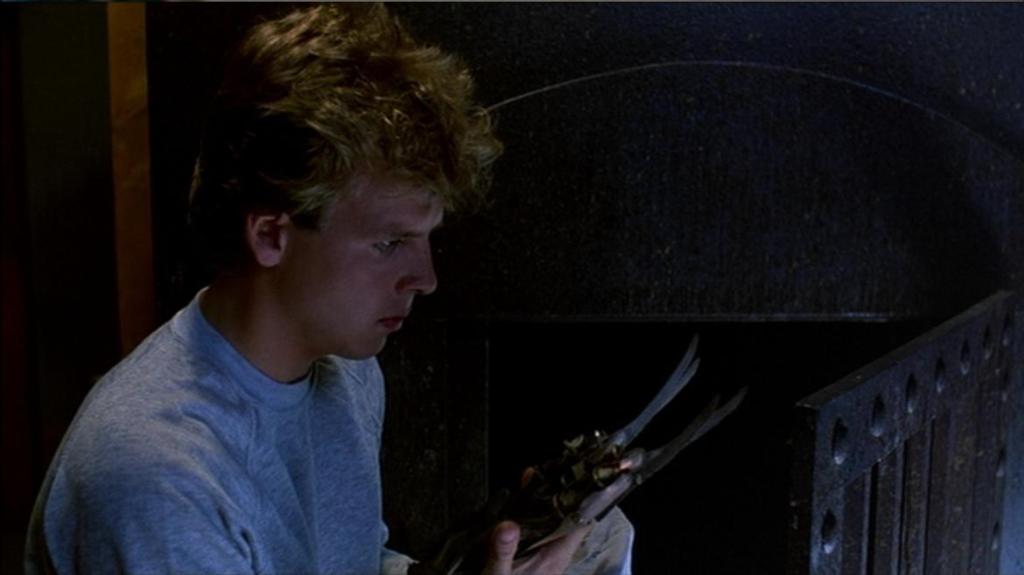
The spirit of Freddy Krueger is the disruptive force in this film that takes the normal Jesse, and transforms him into the other. When Freddy asserts his will on Jesse, it is seen as “the eruption of a queer sexual identity” (Benshoff), and it forces many repressed feelings to the surface. Jesse receives his murder glove from Krueger in the basement (Figure 1), which could represent how deep he had to go in his mind to face these repressed feelings. After he becomes bonded with Krueger, his relationship with his girlfriend and his family suffers.
New Line Cinema
The first time Jesse truly lashes out while possessed is after he is compelled to go to a gay bar, where he is caught and punished by his gym teacher. The teacher, who is clearly homosexual, is then stripped, bound, and beat in sexual manner before being killed by Jesse. The sexuality depicted in this murder shows how when Jesse acts on the repressed queer feelings, it is violent and depraved. Also, having the only openly gay character in this film get killed in this way shows the link between sex and death.
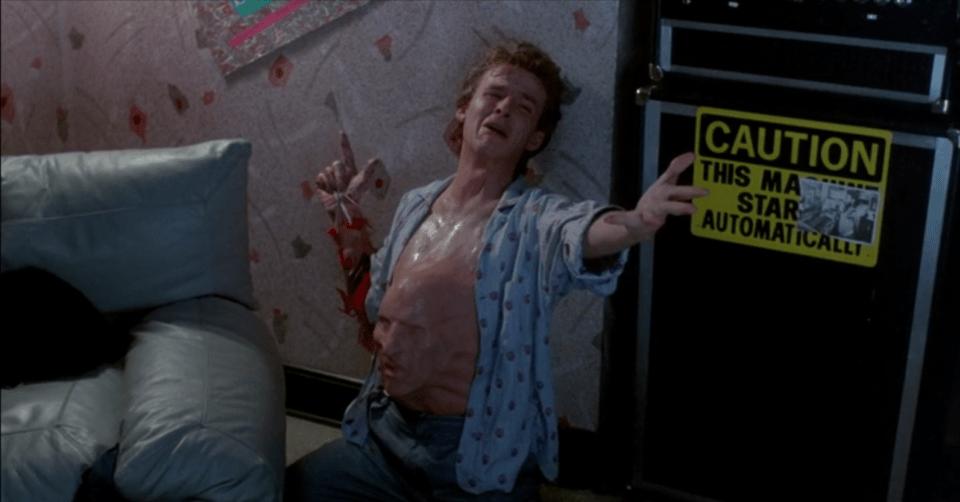
When Jesse is possessed, one character he grows closer to is Grady, who he often had to share gym class punishments with. Grady is portrayed as the hetero, masculine stereotype, which is a persona that is praised in society. Jesse, and the spirit of Freddy, end up corrupting and killing this symbol of normality, when Jesse has to stay at his house out of fear. Jesse may have believed Grady’s masculinity would save him, but in a horrifying way, Freddy emerges from Jesse (Figure 2) and kills Grady. Freddy represents “a displaced and concretized figure of phallic desire” (Benshoff), and this sexual desire had to be substituted for murder.
New Line Cinema
 Site Title