In Robin R. Means Coleman’s article “Studying Blacks and Horror Films”, she looks at how films in this genre reveal and portray Black cultural tropes, as well as the sociopolitical questions raised by them. She explains how horror movies raise many important issues because they deal with not only good and evil, but also social hypocrisies and inequities. She addresses two forms, “Blacks in horror” and “Black horror”, and how they are different. She says “Blacks in horror” films depict Blacks and Blackness in the context of horror, but with no goal of focusing on race. They are often mainstream productions, and they portray the racial other as a disruptive force to a fear free life. “Black horror” films convey common horror themes, but they have a major focus on racial identity, or Blackness. They are made by Black filmmakers, feature Black actors, and are meant for a Black audience. She explains how the ways Blackness is represented in these films is constantly changing and that how Hollywood and the film industry have played a major role in defining color barriers. She then depicts exactly how the image of Blackness has been defined in film by decade, from horribly violent and racist works of the early 1900s, to invisibility and inequality in the 50s and 60s, all the way to constantly being killed of first in the 80s. She closes by talking about the genre in the new millennium, explaining how it has been en-grained with hip hip culture and doomed to low-budget parodies.
In the 1992 film Candyman, many issues regarding race, social problems, and racial identity are brought to the surface. This film involves Helen, a white graduate student, as she studies urban legends and how they come to be. Her main focus becomes the story of Candyman, a mythical, Black man with a hook who appears when his name is said more than 4 times in a mirror. She becomes fascinated by the story when she learns of murders that have been committed in a poverty stricken housing project that are rumored to be the work of Candyman. As she gets more involved, the Candyman haunts her and continues to kill people close to her.
Candyman’s entire character can represent the hardships and struggles that have been placed on African Americans throughout history. His story is that of a young Black man with slave heritage that was brutally tortured and killed by white people. Candyman is portrayed as a follower, if not deity, of a “powerful savage religion” (Coleman). He calls his crimes “miracles” and the people whom he torments as his “congregation”. This power that he holds over the neighborhood is very similar to that of a in-fallible deity, and that keeps “his congregation” afraid and unwilling to change.
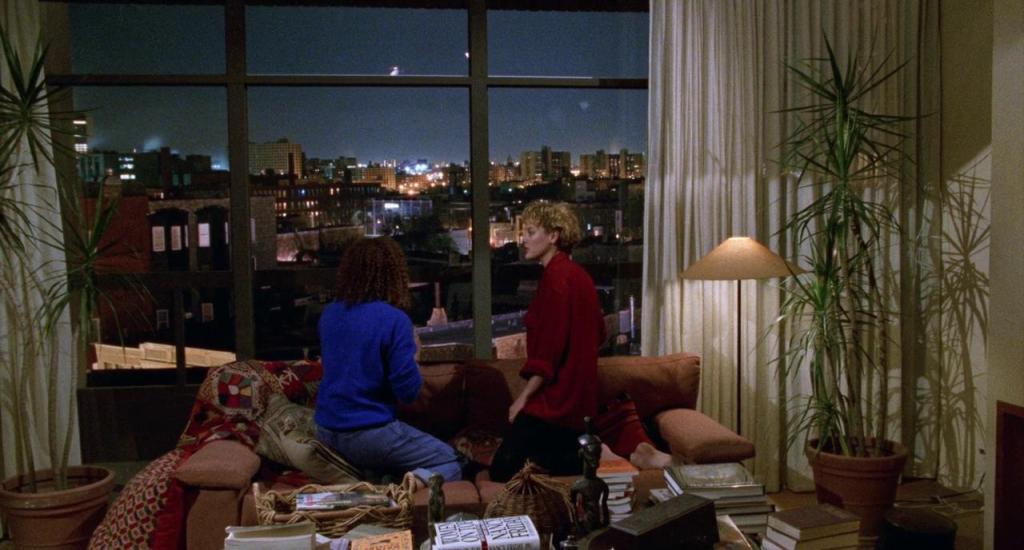
Helen’s relationship and bond with Candyman in the film says a lot about race relations and identity. From her first trip to the projects, Helen is shown to be out of place and out of touch with the people she studies, as she can safely look at the decaying city from the comfort of her condo (Figure 1). This shows the “autonomous Black subjectivity” (Coleman) in the projects, as these people have been ignored and left to fend for themselves. She represents the forces outside of the community that try to make a difference, but end up not really changing a thing. People from outside the community looking in and attempting to change it perpetuates the idea of “the racial other”, and this is the reason why it is so hard for Helen to win. While it is always her goal to help these people, in every situation, she eventually gets labeled as the bad guy, showing how hard it is to make a difference.
Universal Pictures
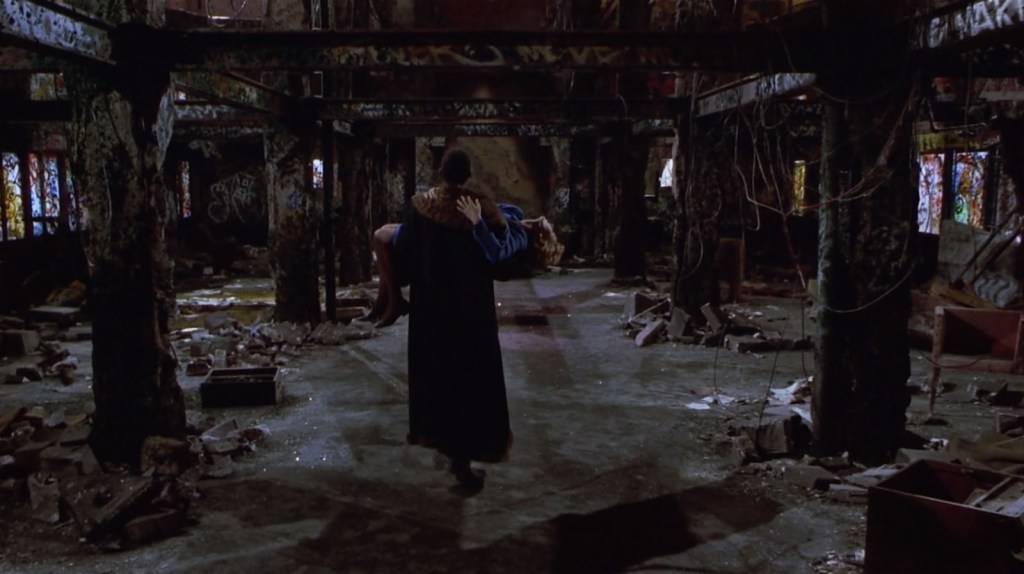
Candyman is the manifestation of all things that have plagued Black communities for years. The name Candyman itself could refer to the plague of drugs and drug dealers that take lives everyday. He also represents urban decay as his messages are written in graffiti and he makes his lair in a ruined building scattered with debris (Figure 2). It is very important that Candyman is a Black man, as it shows the harsh reality that there are people in the community that play a part in perpetuating the horror that exists for people living in it.
Universal Pictures
 Site Title