In Skal’s article “It’s Alive, I’m Afraid” he points out America’s fascination with freaks and monsters. He talks about how human’s are most fascinated by freaks that are products of human reproduction. Much of this has to do with sex, and this obsession reached its height when sex became a lot more relaxed and promiscuous during the 1960s, when contraceptives became common place in the country. This resulted in films that showed themes of sexual anxiety and confusion. He explains that during this period, normal childbirths in film simply did not occur anymore. Parenthood also began to be looked at differently, considering this was a period in which children constantly rebelled against their elders. Themes like fearing parenthood, loathing one’s own child, and longing to be like a child became very common in cinema.
In the 2014 film The Babadook, many issues regarding childhood and being a mother are studied. The film centers around Amelia and her son first grade son Samuel, who live alone. It is pointed out early on that the reason they are without a male presence is because Samuel’s father was killed in a car accident while driving Amelia to the hospital to give birth to Samuel. It is painfully clear that this event has driven a rift between Amelia and her son, who seems to have many behavioral issues. These problems between the young mother and son are soon blown up beyond proportion when a terrifying monster from a children’s book begins to manifest itself inside their home.
Amelia represents the stereotypical panicked mother in this film. It is clear that she has never really recovered from losing Samuel’s father, even though it has been nearly seven years. She works a miserable job at an old folks home and then she has to come home to take care of her rambunctious child. Samuel’s presence in the home is almost like “a violent invasion by the enemy” (Skal), as it is clear that she finds little comfort in his presence.
When the Babadook begins to terrorize her, it is almost a materialization of all the stress and guilt that she feels from being a mother. One of the lines in the story is that you cant get rid of the Babadook, and that idea of being trapped with no way out is basically how she feels about being Sam’s mother. Her paranoia and stress makes leads her to act on her darkest fantasies of killing her son, an action predicted by the Babadook.
The scene that reveals a lot about Amelia is the scene in the basement where she talks to the monster, disguised as her deceased husband. He appears to her out of the shadows, as if the darkest corners of her mind suddenly materialized. She embraces him and admits that she would’ve rather had him survive than given birth to Samuel (Figure 1). This is all the audience needs to know that she resents being a mother, and this scene eventually leads to the Babadook turning her into the monster.
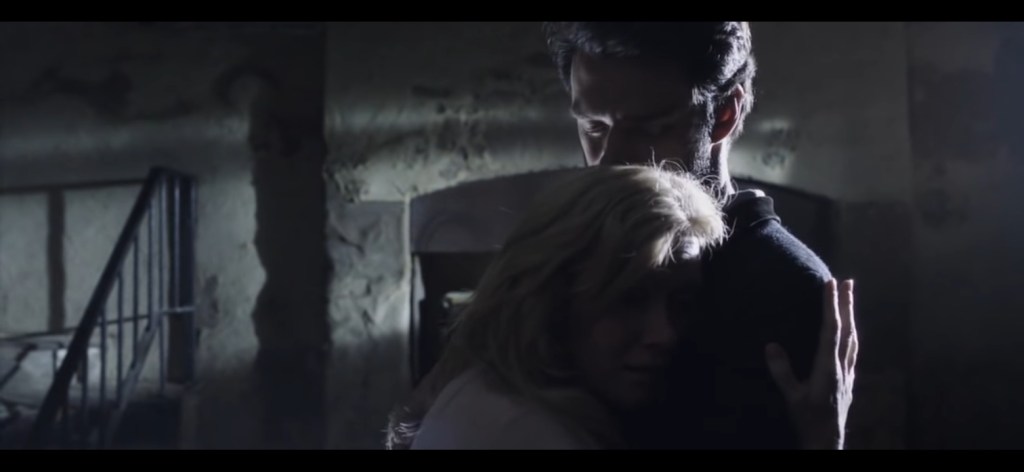
Causeway Films
While the film ends with Amelia redeeming herself and saving her son (Figure 2), it is clear that things are not ok. The audience knows the resentment and anger that exists in Amelia is still there, and that you cant get rid of the Babadook.
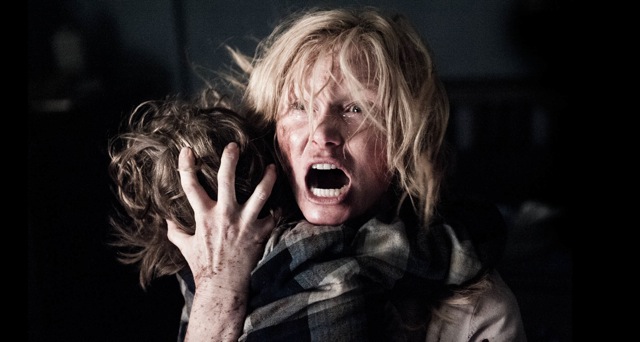
Causeway Films
 Site Title