In Tony Williams’s article “Trying to Survive on the Darker Side: 1980s Family Horror”, he argues that in the 1980s, horror films became more complex and contradictory. He says that while films during the genre’s renaissance in the 70s brought questions against societal norms, the films of the following decade attempted to maintain the dominant values of society. This resulted in many films that had the same structure and feel, and rewarded the masochistic society by slaughtering teens that broke the rules. He also mentions Carol Clover’s work, highlighting how gender confusion turned many of these films into battles pitting the genders against one another. He also mentions how these gender conflicts often result from a masochistic female exerting control over a male. These points all lean towards a general conclusion that conflict is incited in these films by going against the masochistic, patriarchal status quo.
In the 1987 film The Stepfather, many issues regarding family life in the Reagan era are brought to light in a devastating way. This film centers around a man who is on a bloody search for the “perfect” family, marrying single women with children and then killing them once he sees any flaws in them. This man, known as Jerry, has an obsession with tradition and the patriarchal system, and when the symbolic order is broken, he kills and starts his life over again.
Jerry’s whole purpose is to “maintain dominant values” (Williams) that were preached to be normal in the patriarchal society of the Reagan era. He desires a big colonial in the suburbs, a wife who takes care of the house and pleases him sexually, and subservient children who get straight A’s. He works a normal real estate job, spends his free time doing handy-work in his basement, and he insists on praying before meals. The film shows he copies this mold everywhere he goes, as the two houses the audience sees in the film are eerily similar in almost every way (figure 1).
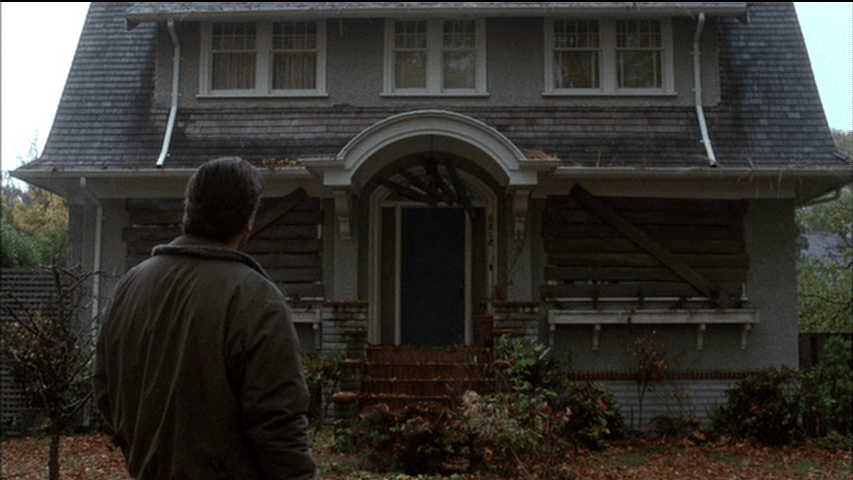
ITC
Stephanie, Jerry’s adopted daughter, represents everything Jerry resents. Jerry terrifyingly wants his relationship with Stephanie to resemble “a master-slave power relationship, stemming from within the patriarchal family”, in which she follows his will without question. However, this proves not to be the case as Stephanie gets expelled, snoops into his past, and kisses a boy on Jerry’s own doorstep.
Jerry is troubled by Stephanie because the one thing he craves above anything else is complete control over his life and the people in it. He adheres to the “Law of the Father” which “aims at preventing the emergence of alternative personal structures”, and maintaining his personal power. He views everything that undermines his control as a threat, including the idea of Stephanie seeing a therapist, which he sees as another man influencing her thoughts. Before he kills the therapist, Jerry briefly mentions his strict home-life as child and this could answer why he needs so much power over others, especially if he had a dominating mother.
Jerry has devoted his life to controlling others and that has elevated himself above everyone in his own mind. He never once believes that he is in the wrong, after all, his values are backed by the status quo. This rejection of personal wrongdoing can be seen after Susan berates him for yelling at Stephanie after she was caught with a boy. When she admonishes him, he snaps and begins to prepare to kill them. This urge to kill them was also confirmed after he spies on another family happily embracing (Figure 2). He believes the perfect family is out there, he just does not see that he can never be part of one.
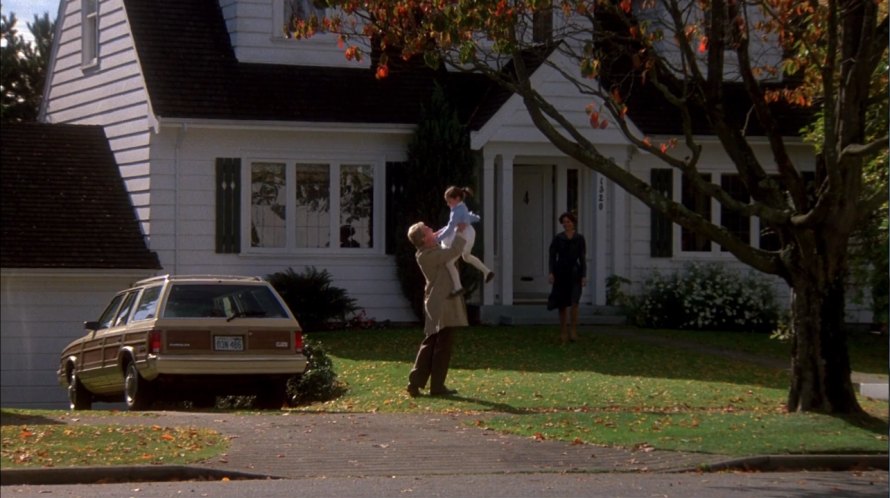
ITC
 Site Title